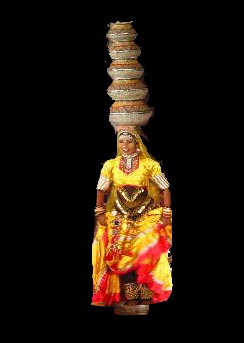
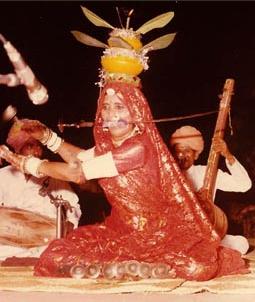
Sampravaahi: the music and
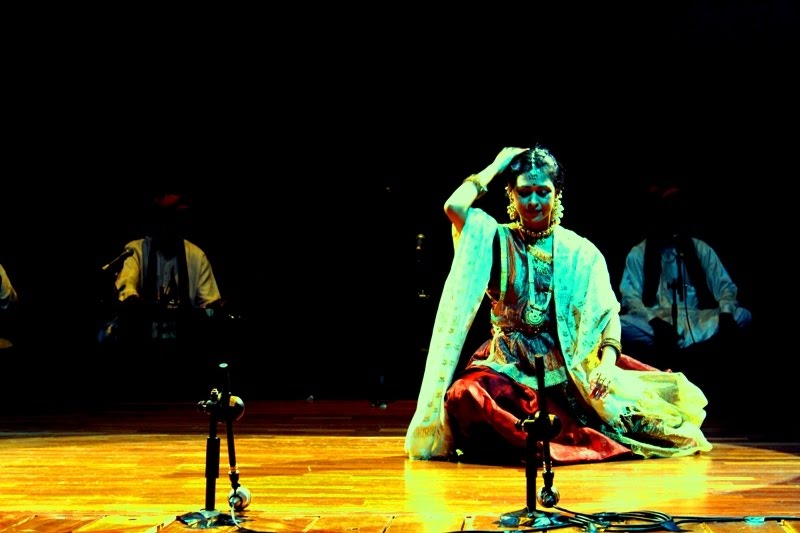
dance presentation is a confluence or coming together of two disparate artistic
streams - Manganiar Music and Singing Styles and Jaipur Gharaana Kathak Dance
traditions from Rajasthan. The presentation intends to explore the hidden
common or compatible features and meeting ground shared by the two as they
blend, interact and, at times, flow parallel to each other but retain their
distinct identities. The multifaceted classicality of the Jaipur gharaana of
Kathak dance and the depth of romanticism, grandeur and gravity of the folklore
and music of Rajasthan weave their magic together.
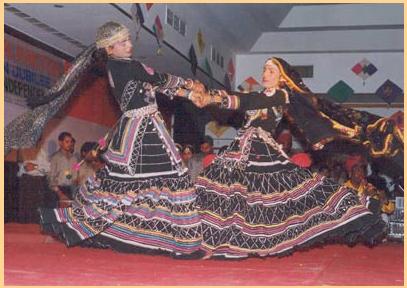
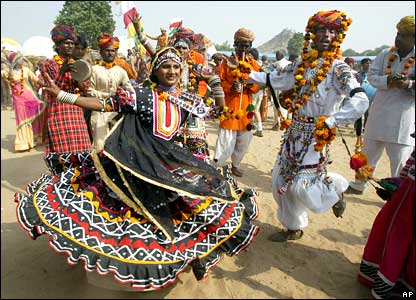
Kalbelia:- The Kalbelia dance of the Snake Charmer Community,
performed to celebrate any joyful moment in the community, is an integral part
of their culture. Male participants take care of the musical part of the dance.
They use the different instruments (Pungi, Dufli, "Been", "Khanjari",
"Morchang", and "Dholak") to create the rhythm on which the
dancers perform. As the performance goes on, the rhythm becomes faster. The Kalbelia
dancers (mainly females) wear long black skirts embroidered with silver
ribbons. Their dance movements resemble that of snakes.